
Modern social paradigms have shifted the focus of culture away from initiation and transformation, emphasizing entertainment, commodification, and accessibility. The role of art and music as transformative, spiritual, or deeply personal experiences may be eroding in the face of societal changes. While the democratization of art-making tools (e.g., DAWs, AI art) has broadened participation, it has also diluted the sense of mastery and apprenticeship traditionally required to engage in initiatic creation.
Instant access to vast amounts of content can overwhelm individuals, reducing the time and focus needed to fully experience and internalize transformative works. The return of art and music to a role as mere accessories is a symptom of the cognitive overload and commodification of the digital age, thus we truly hope that this trend is not absolute or irreversible. By prioritizing intentional engagement, fostering spaces for immersive experiences, and resisting the forces of rapid consumption, art and music can once again fulfill their initiatic and transformative roles. It is a matter of choice and cultural values – both for creators and audiences – to determine whether art and music remain accessories or ascend to something greater. However our practical experience on a daily basis indicates that modern societies prioritize logic, science, and materialism over metaphysical or spiritual pursuits. The initiatic dimension of art often requires embracing mystery, the ineffable, and the irrational – qualities that are undervalued in a super-rational paradigm. In a fragmented, globalized world, shared cultural narratives are eroding. Art and music, which once unified people around common stories or archetypes, now cater to niche markets. The focus on individualism reduces the communal or transcendent aspects of art, emphasizing personal and self centered identity over collective experience. Cultural fragmentation and hyper-individuation is the name of the game in this contemporary delirious rollercoaster ride. In a world that increasingly values efficiency and material success, the creation of art that invites contemplation, mystery, and transformation becomes an act of resistance.
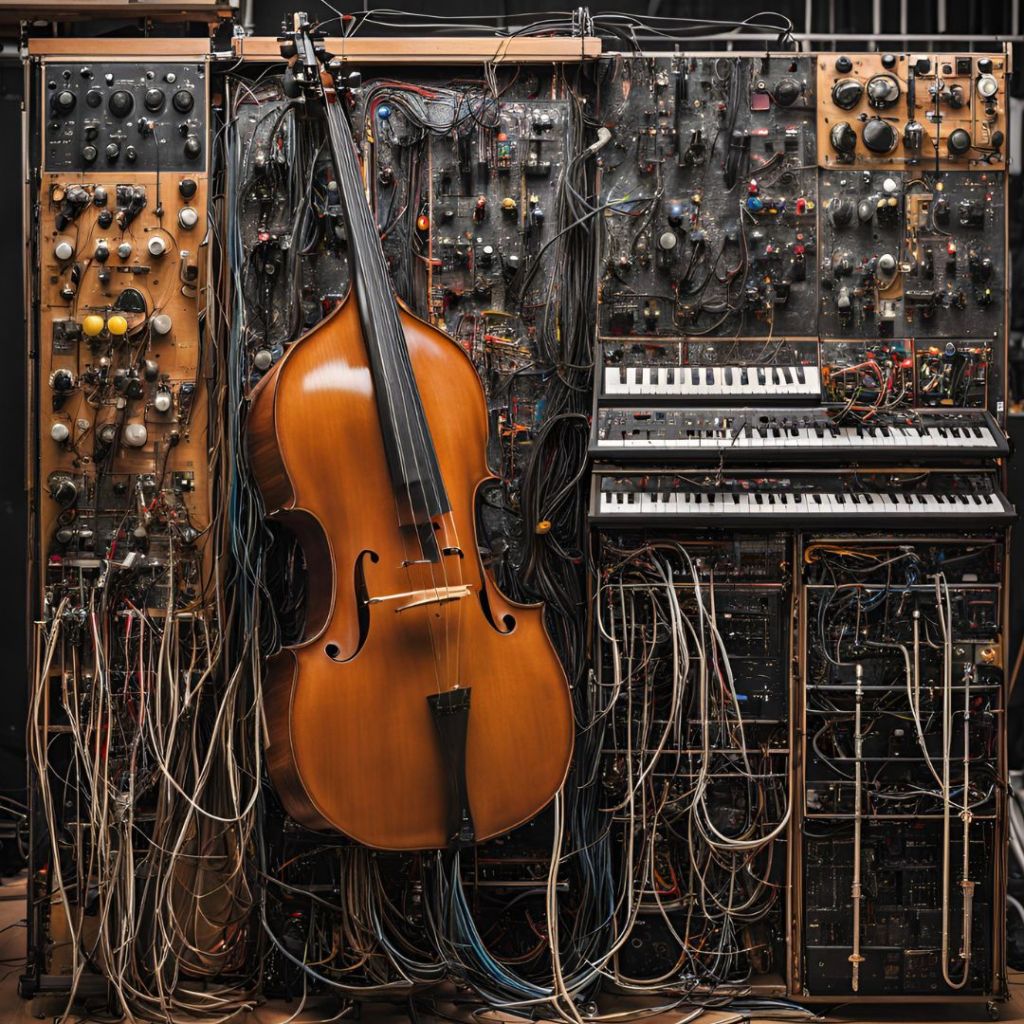
Generating random or semi-random voltages with an oscillator it will provide us unpredictable pitch sequences. These new instruments, the modular and semi modular synths and those easily assembled eurorack systems will allow the instant composer (even the untrained one) to build abstract textures and layers without tonal centers, or any other good old fashioned theoretical restrictions. This is a real and fun method of creating soundscapes with some true musical references here and there, that bypasses genres, habits and traditions. By this soundscapers and musicians can effectively embrace the abstract in all kinds of sonic textures or uncontrolled melody tryouts aligning perfectly with the principles of modern experimental composition.
Let’s take a deeper look at why and how this philosophical shift from structured composition to process-based musical outcome could work well in the creative process of those sonic landscapes that are rich in detail but completely free from conventional constraints. Is there a real need for this kind of manifestation or it is just a simple technological possibility? To fully understand it’s implications, we need to explore why this shift resonates with contemporary creators and listeners, how it addresses artistic and cultural needs, and whether it transcends being merely a byproduct of modern technology. Historically, structured and traditional composition has relied on tonal, rhythmic, and formal systems that reflect cultural and social norms. By abandoning these constraints, process-based creation let musicians and artists to gain a broader canvas for exploration, allowing them to experiment with new soundscapes that challenge traditional musical ideas. Focus on emergent properties of sound and texture rather than predefined outcomes and reflect the diversity and fluidity of modern cultural and personal identities. The evolving preferences of the esteemed listener due to his ongoing attention fragmentationshaped by technology and media, often seek experiences that are immersive, dynamic, and non-linear, mirroring their complex, multitasking lives.
Process-based music aligns with these preferences by offering a journey of discovery, both for creators and listeners. But without intentionality, creators may lean too heavily on technology, resulting in random, unstructured outputs that lack meaning or artistic intent. As process-based tools become more popular, there’s a danger that the uniqueness of this approach could be diluted by market-driven trends.
On the other end – struggling for reclaiming the mystery of music – structured composition often provides clear emotional arcs, with predictable resolutions that satisfy but rarely surprise. Indeed, this ongoing spectacular duel between aesthetics and syntax in music represents more than just a stylistic or technological evolution—it is an existential challenge that continually questions the nature of musical artistry itself. As we stand at the crossroads of process-based generative music and traditional compositional structures, the very foundation of how music is created, perceived, and understood is shifting. This duel is not simply about new tools or trends – it is about fundamental artistic philosophies clashing and coexisting in ways that redefine the meaning of musical authorship, form, and purpose. Music, as an artistic phenomenon, has always navigated the delicate balance between aesthetic experience and structural logic (syntax). These forces, often intertwined, now find themselves in a new state of tension due to technological and philosophical developments. Although for many artists (often untrained) the structured systems of traditional composition feel restrictive. It is true that process-based creation allows for authentic self-expression in ways that structured forms may not accommodate, but can we call this approach truly “compositional”? Or does it transcend composition entirely, moving into a new realm of sonic authorship, environmental design, or emergent aesthetics? This question challenges our foundational assumptions about what it means to compose, create, and express in music.
Indeed, the answer lies in the very next future to be revealed—a future where the duel between structured composition and process-based music will continue to evolve, shaped by technological advancements, artistic intent, and the ever-changing role of the listener. What remains certain is that we stand at a turning point in musical evolution—one where the very definition of composition, authorship, and expression is being reconfigured before our eyes. The unfolding future of music will likely manifest in ways we cannot fully predict. Until than, happy listening…
 Sonoris Ludica